#9 An Analytical Study of Selected Popularized Ogboni/Osugbo Cult Music among the Yoruba People of Nigeria
UDC: 784(=432.561)
COBISS.SR-ID 188597513

Received: Jun 29, 2025
Reviewed: Sep 24, 2025
Accepted: Nov 02, 2025
#9 An Analytical Study of Selected Popularized Ogboni/Osugbo Cult Music among the Yoruba People of Nigeria
Citation: Olusola, Kayode O. 2026. "An Analytical Study of Selected Popularized Ogboni/Osugbo Cult Music among the Yoruba People of Nigeria." Accelerando: Belgrade Journal of Music and Dance 11:9
Abstract
Within the premise of ethnomusicological theory, using cultural analytical tools, this study specifically focused on the analysis of selected popularized music of the Ogboni/Osugbo cult among the Yoruba people in order to identify the content and structure as well as their socio-cultural relevance among the Yoruba society at large. This study made use of the primary method of data collection which includes the use of discography of the selected songs as well as oral interviews with some of the members of the Ogboni/Osugbo cult. The secondary method involves the review of relevant related literature from books, journals and other library materials. The research findings have revealed that the musical practice among the Ogboni/Osugbo cult is secret to non-members or non-initiates except for few popular musicians who popularized it through singing and recording of some of these songs in CDs, VCDs and DVDs for commercial purposes. It is also revealed that these songs have short-verse poetic form originally in monophony before they were harmonized into voice parts by these musicians. The songs were observed to be in compound metre of 4/4 (8/8) and 12/8 time. The text content and theme covers the ritual, entertainment, homage to the superhuman beings, and loyalty and solidarity to Ogboni/Osugbo cult. This study hereby concludes that this study has therefore highlighted and made a contribution to the study of Yoruba traditional music by making provision for the analysis and documentation of this selected popularized Ogboni/Osugbo music among the Yoruba people of Nigeria. This research project thereby recommends that the Federal government of Nigeria through the Ministry of Culture and Tourism should commission the Nigerian popular musicians and Musicologists to record more cult music in Nigeria in order to document them for appreciation and for future references.
ogboni, osugbo, ilu osugbo, erelu, apena, yoruba
Introduction
Music is an important part of African life as music is used in all their day-to-day activities. According to Vidal (1989):
Music is an important part of oriental mysticism, through which men’s inner conscience and awareness could be inflamed
Among Africans, Music forms an integral part of the daily life of the people because it is the most common form in which Africans express their feelings, fears, emotions, love, sentiment, danger, belief and culture. In Africa, musical expression, be it vocal or instrument, is often used as a better medium of communication and social discourse than ordinary spoken language (Olusola 2010).
Vidal opines that
one of the most common forms by which man expresses his emotions, feelings and sentiments [is through music]. (Vidal 2000, 1)
In Africa, music is seen as a part of life and a model for cultural practice. Music is used from birth to death. It is used to express joy when a child is born, as well as to express sorrow when someone dies. It is also used for coronation, puberty rites, and other ceremonies as it arises in different communities - for different events that take place in the community, different music is employed depending on their cultural and environmental background - music used for ritual ceremonies is different from the music used for recreational activities.
There are diverse types of music for diverse functions. Tracy (1969) expressed that music in Africa is seen as “vocal participation and physical manipulation of instruments and the rhythmic or dance movement associated with music”. As such, music could be in vocal or instrumental forms. The vocal form could employ a chorus of a group of boys, group of girls, group of men, group women or combination of both. The instrumental form could also employ drums, flute, trumpet, xylophone, goje among others or combination of instruments and vocal form. In traditional Nigerian society, each of the communities has different musical groups. The numbers and types of social events that take place in a community also determine the numbers of musical groups that exist in such a community.
In any African society especially among the Yoruba people of Nigeria, there are different traditional cults which are created for some certain individuals but restricted to some others. These cults only permit the initiates of that cult to be part of their gatherings and functions. These cults include Oro, Alagemo, Ogboni/Osugbo, Awopa, Alawo/Onisegun among others. Many of these Yoruba cult have their meeting sessions and their activities and practices are secret to the non-initiates. Since music is part of the daily paraphernalia of the Africans, and accordingly music and dance forms part of the activities of every cult in Africa, with musical instruments unique and peculiar to each of them. The music that exists in different cults are believed to play different functions and roles within the cults.
Within the premise of ethnomusicological theory and using cultural analytical tools, this study specifically focused on the analysis of selected popularized music of the Ogboni/Osugbo cult among the Yoruba people in order to identify the textual and musical content and structure as well as their socio-cultural relevance among the Yoruba society at large.
Theoretical framework
The cultural theory as first advanced by Shepherd and Wicke (1997) conceived the understanding of music as a form of human expression. They argue that music is a central, rather than a peripheral activity for individuals and society. Adedeji’s (2012) application in his African perspective to sacred musicology also considers cultural context and hermeneutics in understanding and application of all music principles in popular music. Cultural dimension posits that music is the product of people’s culture and that all music exists and is appreciated with the context of the culture in which it exists. It seeks to understand any music within a society by considering the principles governing musical practice, ideals and cultural worldview or philosophy of that society where the music exists.
In tandem with the above assertion, Vidal (2002) also observes that African music is one of the cultural indices that make Africans Africa. It is a cultural identity that has to do with singing, playing of instruments, dancing and use of various artifacts. Music, over the ages, “as proved” to be one of the indispensable arts cultivated by man for growth, nurture and transfer of his institution and value to future generations. While discussing the activities of the Ogboni/Osugbo cult, Lawal (1995) observes that the Ogboni/Osugbo initiates during their meeting session, greet one another with the left hand and move to the left while dancing to their unique music known as “Agba” music inside their lodge.
In ascertaining that Ogboni/Osugbo cult have the musical instruments peculiar to the cult, Ojo (1973) observed that black mud from a river or lake is a vital part of the ingredients used in consecrating an altar to Ogboni’s house, and a fish-legged figure often dominates the relief decoration on Ogboni drums, linking the terrestrial realm with the aquatic as part of the cult’s core values as shown on their drums.
Historical Background of Ogboni/Osugbo Cult
The consensus in Yorubaland is that the society was founded in Ile-Ife, where it is also known by the name Mole (Idowu 1962, 23-24; Fadipe 1970, 243; Agiri 1972, 52; Adeoye 1989, 337; Adepegba 1991, 34). A terracotta vessel in the Museum of Antiquities, Ile-Ife (illustration in Adepegba 1991, 31), which presumably belongs to the same period as the Ife bronzes (twelfth to fifteenth centuries A.D.) displays what may very well be one of the earliest renderings of the edan motif in Yoruba art ( Williams 1964, 152, quoting in Adepegba 1985, 35).
The Ogboni society attained its highest form of development among the Egba and Ijebu apparently because, as Fadipe has noted (1970, 243-47), political groupings in these areas were small and could easily be controlled by an association of elders. But in bigger towns (as in central and northern Yorubaland) ruled by powerful kings, the society was not as strong; even in Ijebui-Ode it was weaker than in the smaller towns that surrounded it (Ibid.). Admittedly, most of the Ijebu in present-day IIe-Ife live in or very close to the Iremo ward-an area popularly regarded as the original homeland of the people of Ijbui-Remo before they dispersed southward.
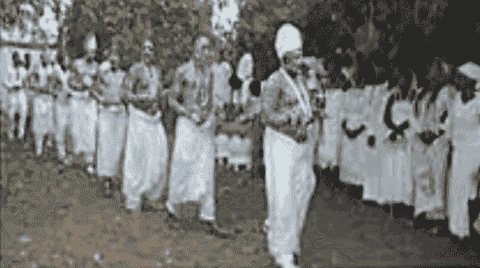
Picture1. The members of the Ogboni/Osugbo during a ritual session. Source: Iledi of Odogbolu
Certain history have it that the formation in December 18, 1914 of the Reformed Ogboni Fraternity by an Anglican priest, Reverend Thomas Adesina Jacobson Ogunbiyi, who revised the rituals and symbolism of the traditional Ogboni (now known as the Aboriginal Ogboni Fraternity, or A.O.F.) to make them acceptable to Christians, Moslems, and non-Yoruba and the introduction of European masonic lodges into Nigeria by some British citizens had led Rev. Ogunbiyi to see similarities between foreign lodges and the traditional Ogboni.
The Ogboni (also known as Osugbo in Ijèbú) is a fraternal institution indigenous to the Yoruba-speaking polities of Nigeria, Republic of Bénin and Togo, as well as among the Edo people. The society performs a range of political and religious functions, including exercising a profound influence on monarchs and serving as high courts of jurisprudence in capital offenses. Its members are generally considered to constitute the nobility of the various Yoruba kingdoms of West Africa. The traditional Ogboni society was part of the checks and balances system of the Yoruba kingdoms, as they performed as kingmakers, and disposed of both a religious as well as a judicial functions. They had also the power to dethrone Oba (the king) and could order him to kill himself (or would give him poison).

Picture2. Erelu and Apena of Osugbo cult in Odogbolu. Source: The Chief Apena of Odogbolu.
The ethnographic work on their role and function in the 19th and early 20th century dates back to the 1930s. Nevertheless, no in-depth knowledge on their structure and inner workings after independence is available. They are thought to still dispose of considerable local influence, forming part of the traditional power network to regulate societies and control resources. It is assumed that through their membership they also have strong connections to official state structures (police, judiciary, omission, universities).
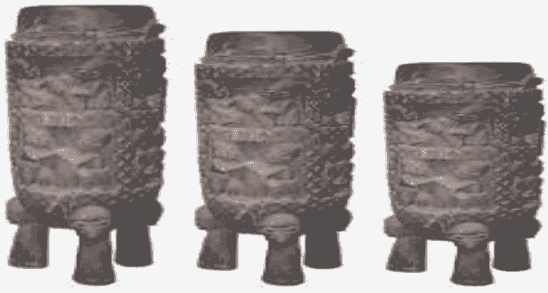
Picture3. Osugbo Drum Ensemble. From left: Iya-Ilu, Atele Isaaju, Atele Ikehin. Source: The Yoruba
Analysis of Selected Popularized Ogboni/Osugbo Cult Music
All songs collected are all dance forms of music with lyrics in song form. The analysis of the musical data in this study shall be in three categories, and they are:
- Textual Analysis
- Musical analysis
- Socio-religious analysis
Textual Analysis
The textual analysis of music is based on the text content, translations and themes of selected popularized Ogboni/Osugbo cult songs by few Nigerian popular musicians.
Song 1: Ba Eni Njoye

Example 1. Ba Eni Njoye. Source: author.
Lyrics
| Yoruba Language | Translation |
|---|---|
| Ba Eni Njoye | our Father is being installed as a chief |
| Ba Eni Njoye | our Father is being installed as a chief |
| Kalo mu saki kafi wa soja aran o | let us get our fabrics to sow our regalia |
| Ba eni njoye | our father is being installed as a chief |
| Kalo mu saki kafi wa soja aran o | let us get our fabrics to sow our regalia |
| Ba eni njoye | our father is being installed as a chief |
The song above was popularized by Jimi Solanke’s musical album. The song is sung during the official chieftaincy ceremony of installing worthy members as chiefs of Ogboni/Osugbo cult among the Yoruba. According to Rasheed Sodeko (oral interview, 2024), this session is always celebrated with music and dance. This song is performed in Yoruba language with Ijebu dialect. The text content and theme of the song focus on praising and telling the importance of person(s) being installed as chief(s). The poetic form of the song is in short-verse form with poetic devise in call and response. The song was performed in Yoruba language in Ijebu dialect; while the poetic setting is syllabic.
Song 2: Ko S'eni To Nf'Obi J'epo

Example 2. Ko S'eni To Nf'Obi J'epo. Source: author.
Lyrics
| Yoruba Language | Translation |
|---|---|
| Ko s’eni to n’fobi jepo laye | no deity does eat kolanut with palm oil on earth |
| Ko s’eni to n’fobi jepo | no deity does eat kolanut with palm oil |
| Ko s’eni to n’fobi jeyo | no deity does eat kolanut with salt |
| Ko s’eni to n’fobi jepo | no deity does eat kolanut with palm oil |
| Esu nikan lo le fobi jepo laye | only Esu does eat kolanut with palm oil on earth |
| Esu nikan lo le fobi jepo | only Esu does eat kolanut with palm oil |
| Oun nikan lo le fobi jeyo | it is only Esu does eat kolanut with salt |
| Oun nikan lo le fobi jepo | it is only Esu does eat kolanut with palm oil |
The song above was popularized by Tunji Oyelana in his musical album. The song is sung during the official ritual session of the worship of Esu (devil) and other gods by members of the Ogboni/Osugbo cult among the Yoruba. According to Bashiru Osinuga (oral interview, 2024), this ritual session must start with the worship of Esu in order to prevent bad incidence before other gods are worshipped. This is done with different incantations and praise chants for each traditional god. This song is performed in Yoruba language with Ijebu dialect. The text content and theme of the song focus on praising and telling the attributes of Esu (devil). The poetic form of the song is in long-verse form with poetic devise in chorus with verse form. The song was performed in Yoruba language in Egba dialect; while the poetic setting is syllabic in structure.
Song 3: Ogberi S'igba Awo

Example 3. Ogberi S'igba Awo. Source: author.
Lyrics
| Yoruba Language | Translation |
|---|---|
| Ogberi s’igba awo sigba awo | non-initiates dares open the cult’s secret pot |
| Sigba awo eh eh eh eh eh eeeeh | novice dare not open it eh eh eh eh eeeeh |
| Ogberi sigba awo eh eh eh eeeeh | novice dare not open it eh eh eh eh eeeeh |
| Sen sen sen sigba awo | he dare no open the cult’s secret pot |
| Sen sen sen, sigba aye | novice dare not open odd world’s pot |
| Ogberi s’igba awo sure w’enkule orun o | anyone who does will die instantly |
| Iba fun apani mayo ma yoda o | homage to the spiritual killers without weapons |
| Yeye awa apani ma yoda | our spiritual mothers who kills without weapons |
The song above was popularized by Hubert Ogunde in his musical album. The song is sung during the official praise session of the Erelu (women leader) and other powerful, highly spiritual and influential women members by other members of the Ogboni/Osugbo cult among the Yoruba. According to Bashiru Osinuga (oral interview, 2024), this praise session is to pay homage to the great spiritual mothers with supernatural powers among the members who have the powers to know, foresee and control powers in the universe. This is because without them being recognized and praised, the operations of the Ogboni/Osugbo cannot be auspicious and successful. The text of the music has its poetic form in long-verse form with poetic devise in chorus with through-composed style. The song was performed in Yoruba language in Oyo dialect; while the poetic setting is syllabic.
Song 4: Awo Ti Mo Mo Ni Mose

Example 4. Awo Ti Mo Mo Ni Mose. Source: author.
Lyrics
| Yoruba Language | Translation |
|---|---|
| Awo ti momo ni mose o | I belong to a dignified cult |
| Awo ti momo ni mose | I belong to a dignified cult |
| Mi o sawo obun | I don’t belong a stinking cult |
| Mi o sawo eke | I don’t belong to a mischievous cult |
| Mi o sawo odale | I don’t belong to the cult of the traitors |
| Awo ti momo ni mose o | I belong to a dignified cult |
The song above was popularized by various departments of theatre arts in some Nigerian universities in South-West. This song was part of the songs used for students’ initiation ceremonies into their department. The song is originally sung during the entertainment session of meetings of the Ogboni/Osugbo cult among the Yoruba. According to Lawal Sodiya (oral interview, 2024), this song is a solidarity song by members to the cult and its cause. It is performed to express love, belief and commitment to the cult as a dignified cult different from other cults. The text of the music has its poetic form in short-verse form with poetic devise in chorus with through-composed style. The song was performed in Yoruba language in Oyo dialect; while the poetic setting is syllabic.
Musical Analysis
Musical Forms
The basic musical forms observed in the popularized Ogboni/Osugbo cult music are mainly the Song form. The Song-verse constitutes about 100 percent of all the songs collected. The songs are accompanied with both local and western musical instruments.
Structural Form
Music observed in the popularized Ogboni/Osugbo cult music are structured in both monostrophic, responsorial, and call and response. The songs in chorus with monostrophic and call and response style between the lead-singer and the chorus are performed repeatedly for as long as the singer wishes.
Rhythmic Structure/Text Settings
The rhythm of songs are structured in call and response for two groups with a lead-singer followed by chorus response during performance. The setting of the melody is done in syllabic form. That is, a syllable to a tone.
Texture/melody
The texture observed in the popularized Ogboni/Osugbo cult music are majorly monophonic in texture. This is because some in the chorus are purely monophonic. That is, only one single melodic line. Others are harmonized in parallel 3rds in African harmonic style. The melody was structured based on the tonal language of the people of Ijebu, Egba and Oyo-Yoruba dialect.
Musical Scale
Due to the influence of Yoruba tonal language on the songs, the scale observed in the popularized Ogboni/Osugbo cult makes use of variant of pentatonic scales (d-r-m-s-l-) or (d-r-f-s-l) with different cadential modes depending on the dialect.
Melodic movement/contour
It was observed that most of the popularized Ogboni/Osugbo cult music have the melodic movements in both upward and downward styles, depending on the words of the music. Therefore making the melodic contour to be undulating.
Cadential formula
The cadential formula observed in the lyrics are in various modes. The music in song form have their cadences in reh to doh (supertonic to tonic) and lah to doh (submediant to tonic).
Research Findings and Conclusion
The research findings have reveals that the musical practice among the Ogboni/Osugbo cult is secret to non-members or non-initiates except for few popular musicians who have decided to bring the music close to the people through singing and recording of some of these songs in CDs, VCDs and DVDs for commercial purposes. It is also revealed that these songs have short-verse poetic form originally in monophony before they were harmonized into voice parts by these musicians. The songs were observed to be in compound metre of 4/4 (8/8) and 12/8 time. The text content of the selected songs covers the ritual, entertainment, homage to the superhuman beings and loyalty and solidarity to Ogboni/Osugbo cult.
This study hereby concludes that music and musical instruments by the Ogboni/Osugbo cult have socio-cultural relevance because the music is a unique culture among the members of the cult and it should be appreciated and documented as part of Yoruba’s rich musical culture. Therefore, the popular musicians’ effort to make some of these songs popular to the public should be commended. This study has therefore highlighted and made a contribution to the study of Yoruba traditional music by making provision for the analysis and documentation of this selected popularized Ogboni/Osugbo music among the Yoruba people of Nigeria.
References
- Adedeji, Adewale. 2010. ‘Yoruba Culture and Its Influence on The Development of Modern Popular Music in Nigeria.’ PhD thesis, University of Sheffield.
- Adedeji, S.O. 2012. ‘Yoruba Traditional Musical Elements in Church Worship: Cultural, Musicological and Biblical Considerations’ OJOT: Ogbomoso Journal of Theology. XVII(2). 173-196.
- Adeoye, C. L. 1989. Igbagbo ati Esin Yoruba. Nigeria: Evans Bros.
- Adepegba, C. 0. 1991. Yoruba Metal Sculpture. Ibadan: Ibadan University Press.
- Adepegba, C. O. 1985. "Edan Staffs of the Ogboni Society in Yoruba Cultural Panorama." Journal of African Studies 44:13-21.
- Adewale, S. A. 1988. The Religion of the Yoruba: A Phenomenological Analysis. Ibadan: Dept. of Religious Studies, University of Ibadan. Adewale-Abayomi, F. A. M.
- Agiri, B. 1972. "The Ogboni among the Oyo Yoruba." Lagos Notes and Record 3(2):50-59.
- Bascom, W. R. 1951. “Social Status, Wealth and Individual Difference Among the Yoruba.” American Anthropologist. New series Vol.53(4): 490-505.
- Falola, T. and Demola Babalola. 1991. “Religion and Economy in Pre-colonial Nigeria.” In Religion and Society in Nigeria, edited by Jacob Olupona and Toyin Falola, 151-169. Ibadan: Spectrum Books.
- Levinson, D. “Fulani”. In Encyclopedia of World Cultures: Africa and the Middle East. Vol.9, Gale group.
- Drewal, H. J. and M. T. Drewal. 1983. Gelede: Art and Female Power among the Yoruba. Bloomington: Indiana University Press.
- Drewal, H. J., Pemberton J., and Abiodun R. 1989. Yoruba: Nine Centuries of African Art and Thought. New York: The Center for African Art in association with Harry N. Abrams Publishers.
- Drewal, M. T. 1989. "Dancing for Ogun in Yorubaland and in Brazil." In Africa's Ogun: Old World and New, edited by S. T. Barnes. Bloomington and Indianapolis: Indiana University Press.
- _____. 1992. Yoruba Ritual: Performers, Play, Agency. Bloomington and Indianapolis: Indiana University Press.
- Eluyemi, O. (n.d.) This is Ile-Ife. Ile-Ife: Adesanmi Printing Works.
- Englebrecht, B. and B. Gardi (eds.). 1989. “Man Does Not Go Naked: Textilien und Handwerk aus Afrikanischen und Anderen Landern.” Basler zur Ethnologie 29.
- Basel, Epega D. O. (n.d.). The Basis of Yoruba Religion. Lagos: Ijamido Printers.
- Cornwall, A. (n.d.). “Spending Power: Love, Money, and the Reconfiguration of Gender Relations in Ado-Odo, Southwestern Nigeria.” American Ethnologist 29(4): 963-980.
- Eyo, E. 1987. Two Thousand Years of Nigerian Art. Lagos: Federal Dept. of Antiquities.
- Fadipe, N. A. 1970. The Sociology of the Yoruba. Ibadan: University of Ibadan Press.
- Fafunwa, A. B. 1991. History of Education in Nigeria. Ibadan: NPS Educational Publishers.
- Fagg, W. 1963. Nigerian Images. New York: Praeger.
- Fagg, W. and J. Pemberton. 1982. Yoruba Sculpture of West Africa. New York: Alfred A. Knopf.
- Frobenius, L. 1913. The Voice of Africa. London: Hutchinsons. 2 vols.
- Gosline, S. L. 1989. "Le Role Cosmologique de l'Ogboni." Arts d'Afrique Noire 72: 32-43.
- _____ . 1992. "Sky and Earth Reconciled: Ogboni Initiation/Le Ceil et La Terre Reconcilies: L'Initiation Ogboni." Arts d'Afrique 82: 31-43.
- Harper, P. 1970. "The Role of Dance in the Gelede Ceremonies of the Village of Ijio," Odu n.s. (4): 67-94.
- Houlberg, M. H. 1973. "Ibeji Images of the Yoruba." African Arts 7(1): 20-27.
- Ibigbami, R. 1978. "Yoruba Traditional Pottery: Its Ritual Context and Use," The Nigerian Field 43(3): 127-32.
- Idowu, E. B. 1962. Olodumare: God in Yoruba Belief. London: Longmans.
- Johnson, S. 1921. The History of the Yorubas. Lagos: C.M.S. Bookshops.
- Kosemanii, S. 1987. Owe ati Asayan Oro Yoruba. Ibadan: Vantage Publishers.
- Lawal B. 1995. "À Yà Gbó, À Yà Tó: New Perspectives on Edan Ògbóni". African Arts, Vol. 28(1), 36-49. UCLA James S. Coleman African Studies Center.
- Lawal, B. 1989. "A Pair of Ere Ibeji in the Kresge Art Museum." Kresge Art Museum Bulletin 1(4): 10-15.
- Lawal, Babatunde. 1974. "Some Aspects of Yoruba Aesthetics." The British Journal of Aesthetics 14(3): 239-49.
- _____. 1975. “À Yà Gbó, À Yà Tó: New Perspectives on Edan Ògbóni.” African Arts Vol. 28, No. 1 (Winter, 1995): 36-49+98-100. Published by: UCLA James S. Coleman African Studies Center. jstor.org
- Lawuyi, O. B. 1986. "Reality and Meaning: A Review of the Yoruba Concept of Esu." Afrika und Übersee 69(2): 299-311.
- Lucas, J. O. 1948. The Religion of the Yorubas. Lagos: C.M.S. Bookshop.
- McClelland, E. 1982. The Cult of lfa among the Yoruba. London: Ethnographica Publishers.
- Molade, T. 1973. "The Concept of Abiku." African Arts 7(1): 62-64.
- Morton-Williams, P. 1964. "An Outline of the Cosmology of the Cult Organization of the Oyo Yoruba." Africa 34(3): 243-60.
- Morton-Williams, P. 1960. "The Yoruba Ogboni Cult in Oyo," Africa 30(4): 362-74.
- Ogunba, O. 1964. "Crowns and Okute at Idowa." Nigeria (83): 249-61.
- Ogunpolu, T. 1975. "Okosi Festival Songs." In Yoruba Oral Tradition, 551-97. Edited by W. Abimbola. Ile-Ife: Dept. of African Languages and Literatures, University of Ife.
- Ojo, G. J. A. 1966. Yoruba Culture: A Geographical Analysis. London: University of Ife and University of London Press.
- Ojo, J. R. O. 1973. "Ogboni Drums." African Arts 6(3): 50-52, 84.
- Olatunji, O. 1984. Features of Yoruba Oral Poetry. Ibadan: Ibadan University Press.
- Opadotun, O. 1986. Aroko: Awon Ani ati Iro Ibaniso L'Aye Ijeloo. Ibadan: Vantage Publishers.
- Parrinder, G. 1967. The Story of Ketu. Ibadan: Ibadan University Press. 2nd ed.
- Parrinder, G. 1953. Religion in an African City. London: Oxford University Press.
- Parrinder, G. 2021.”Some Western Yoruba Towns.” Yoruba Studies Review 1(2). doi:10.32473/ysr.v1i2.130182
- Pemberton, J. 1985. “Review of Ifa and Eshu: Icoinography of Order and Disorder by H. Witte.” African Arts 18(2): 88-91.
- Pemberton, J. 1981. "Pair of Figures for Eshu." In For Spirits and Kings: African Art from the Paul and Ruth Tishman Collection, 98-99. Edited by S. Vogel. New York: The Metropolitan Museum of Art.
- Roache, L. E. 1977. "Psychophysical Attributes of the Edan Ogboni." African Arts 4(2): 48-53.
- Roache-Selk, E. 1978. From the Womb of the Earth: An Appreciation of Yoruba Bronze Art. Washington, DC: The University Press of America.
- Simpson, G. 1980. Yoruba Religion and Medicine in Ibadan. Ibadan: University of Ibadan Press.
- Smith, R. 1988. Kingdoms of the Yoruba. Madison: University of Wisconsin Press. 3rd ed.
- Thompson, R. F 1973. "Yoruba Artistic Criticism." In The Traditional Artist in African Societies, 19-61. Edited by W. d'Azevedo. Bloomington: Indiana University Press.
- Thompson, R. F. 1971. Black Gods and Kings: Yoruba Art at U.C.L.A. Los Angeles: University of California Press.
- Verger, P. 1966. "The Yoruba High God-A Review of the Sources." Odu, University of Ife Journal of African Studies 2.
- Fajana A.”Some Aspects of Yoruba Traditional Education.” Odu Journal of African Studies Vol. 3(1): 15-23.
- Fafunwa A. 1974. History of Education in Nigeria. Ibadan: NPS Educational Books: 1974. Pp. 3-5
- Oduyoye, M. Yoruba Names: Their Structures and Meanings. Ibadan: Daystar Press: 1982. p. 12.
- Bascom, William R. 1951. “Social Status, Wealth and Individual Differences among the Yoruba Permalink.” Journal American Anthropologist 53(4): 490-505. UC Berkeley Anthropology Faculty Publications. jstor.org
- Oyewale, Oluwaseun. 2017. “The Yoruba Concept of Ola in African Society: A Historical Overview.” doi:10.13140/RG.2.2.36039.52648
- Olatunji, Ojo. 1996. “Ekiti women in agricultural production,1890-1960” , M.A. dissertation , University of Ibadan, December 1996.
- _____ . 2001. “Yoruba women, Cash Crop Production and the Colonial State, c1920-1957.” York University, Toronto Presented at the conference on "Atlantic Crossings: Women's Voices, Women's Stories from the Caribbean and the Nigerian Hinterland", Dartmouth College, May 18-20, 2001.
- _____. 2002. O. Ojo. More than Farmers' Wives: Yoruba women and Cash Crop Production, c.1920 - 1957. New Jersey: Africa World Press: 2002. pp. 383-404.
- Olawale, Isaac Albert, Tinu Awe, Georges Hérault and Wuyi Omitoogun. 2013. Informal Channels for Conflict Resolution in Ibadan, Nigeria. Ibadan: IFRA-Nigeria.
- Vidal, Tunji. 2012. Essays on Yoruba Musicology : history, theory and practice. Obafemi Awolowo University Press, for IMEF African Music Publishers, Ile Ife, Nigeria, 2012.
- Shepherd John and Wicke Peter. 1997. ‘Music and Cultural Theory’. Cambridge: Polity Press, ix + 230 pp.
Discography
- Hubert Ogunde and His Studio Band. 1979. ‘Sigba Awo’ from the “Aye “Film Sound track.
- Jimi Solanke
- Tunji Oyelana. 1996. ‘Ko Seni Ton Fobi Jepo’ in the Album “Cuban Connection” EMI Records
